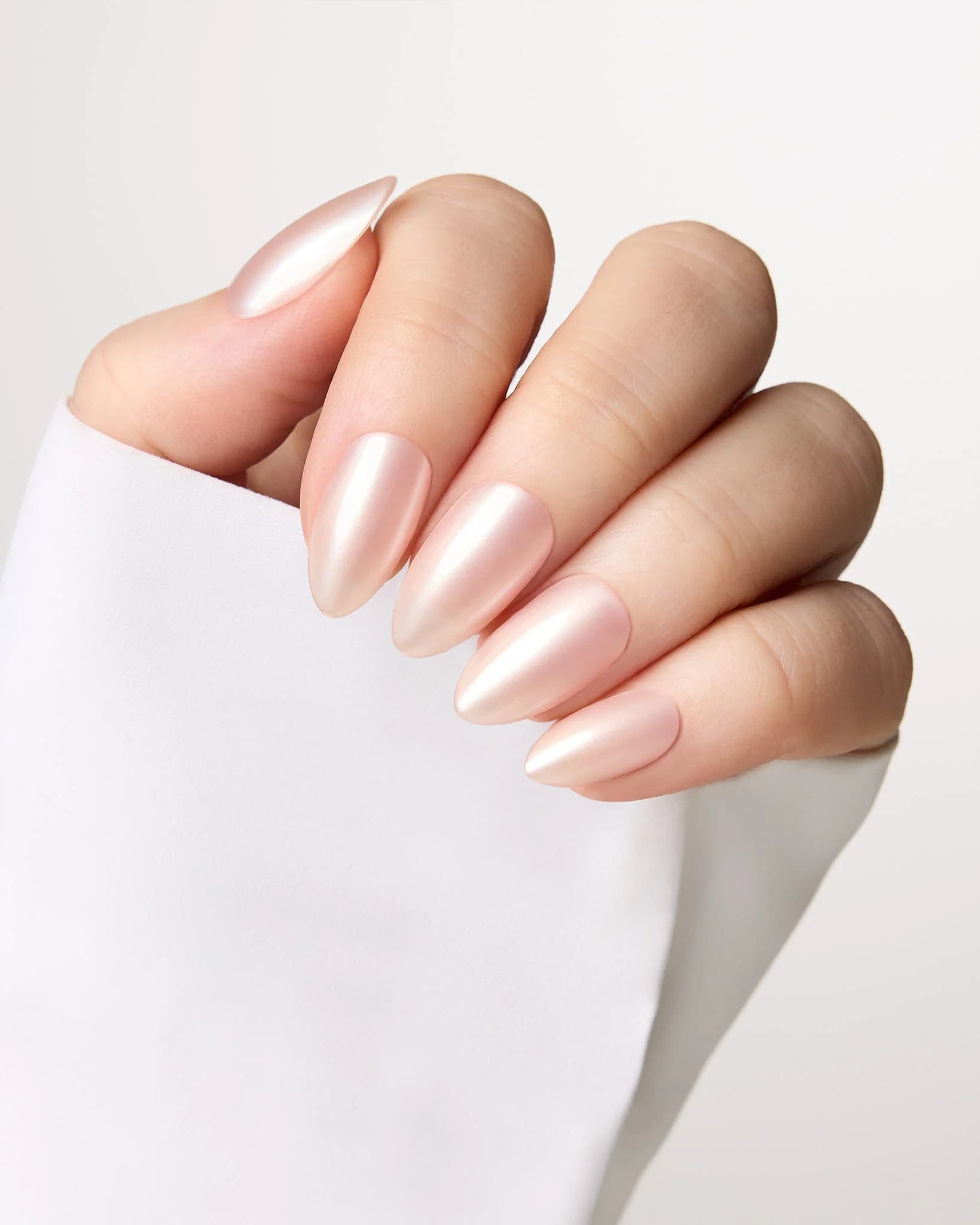
Master technicians demonstrate how structural apex sculpting creates diamond-grade reflections without bulk.
The glazed almond nail has become the defining silhouette of the current editorial season. Unlike the blunt square or the dramatic stiletto, the almond strikes a precise balance between architectural intention and biological softness — and when executed with a glazed finish, it produces a light-catching quality that reads as genuinely luxurious in both natural and studio lighting.
The Geometry of the Almond
A true almond nail tapers symmetrically from the widest point at the stress line to a rounded, slightly narrowed tip. The curve must be even on both sides — any asymmetry catches light differently on each edge, creating a visual imbalance that reads as amateur in close-up photography.
Apex Placement and Structural Integrity
The apex — the highest point of the nail’s arch when viewed from the side — determines both the aesthetic and the structural integrity of the enhancement. A correctly placed apex sits at roughly two-thirds of the nail’s length from the cuticle, creating a gradual slope toward the tip that distributes stress evenly and prevents snapping at the free edge.
Building the Glazed Finish
The glazed effect is achieved through a specific layering sequence rather than a single product. A sheer, skin-toned base in either soft gel or builder gel creates the translucent depth. A single layer of chrome powder — buffed with a silicone tool rather than a sponge applicator — creates the mirror surface. A non-wipe gel top coat seals everything without disturbing the chrome.
Sheen Ratios by Nail Bed Length
The ratio of glaze to nail bed length matters significantly. On shorter nail beds, a full-coverage chrome reads as overwhelming. Editorial technicians recommend leaving the proximal 2mm matte or lightly buffed, allowing the glazed portion to begin just past the cuticle area and intensify toward the tip.
Longevity Considerations
The glazed almond’s Achilles heel is tip wear. The narrowed free edge concentrates impact and shows chips more visibly than a square or squoval shape. Weekly application of a thin layer of gel top coat at the tips extends wear significantly without requiring a full appointment.