The fourth-season color retrospective examines the definitive seasonal color retrospective explained through the lens of luxury minimalism.
Autumn’s nail palette has undergone a quiet revolution. Where previous seasons leaned into bold burgundies and deep emeralds, the current editorial consensus has settled on something more nuanced — a family of warm, brown-adjacent tones that sit at the intersection of sophistication and restraint.
The Espresso Family
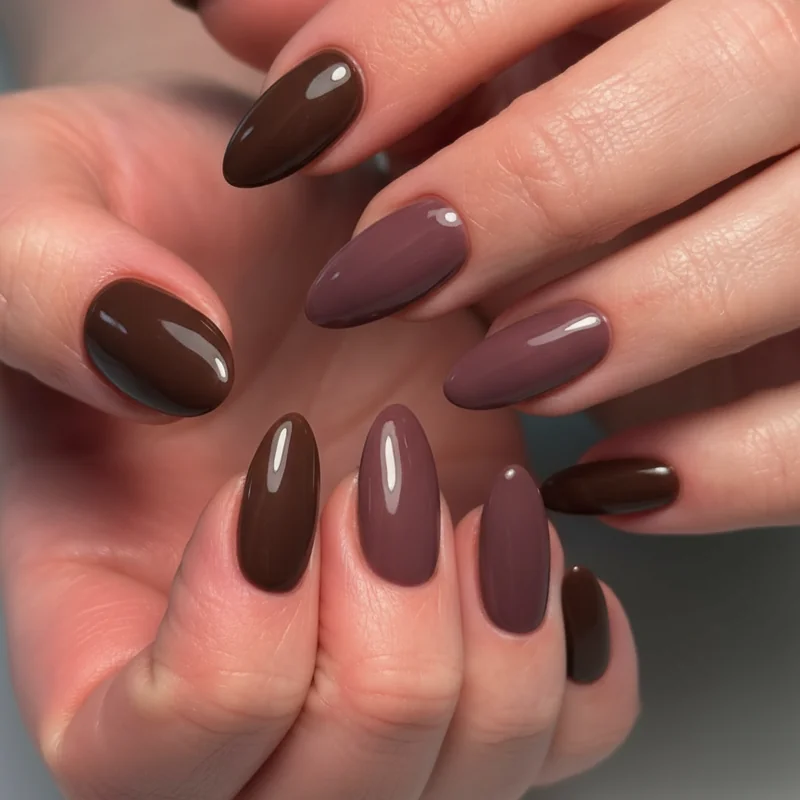
Espresso glaze encompasses a range of shades from dark, roasted brown through to lighter, caramel-adjacent tones. What unites them is their warmth — these are browns with red or gold undertones rather than gray or green ones, and that warmth is what makes them work against a wide range of skin tones and autumn wardrobes.
Why Brown Works Now
The resurgence of brown as a luxury nail color is directly tied to the quiet luxury aesthetic that has dominated fashion for several seasons. Brown signals restraint, heritage, and a certain nonchalance that reads as expensive precisely because it makes no effort to impress. It is the nail equivalent of a cashmere turtleneck.
Finish Variations Within the Family
The espresso palette reads very differently depending on finish. In a high-gloss gel, it looks modern and editorial. In a matte or satin finish, it reads as more heritage and grounded. A subtle shimmer — particularly a fine gold or copper particle — elevates it for evening without moving into maximalist territory.
Complementary Shades
The espresso palette pairs naturally with the other tones dominating autumn fashion: camel, cream, forest green, and cognac. Nail technicians working with clients on full seasonal looks note that espresso nails never compete with clothing — they anchor the hand without drawing attention away from the overall composition.
Application Notes
Deep browns require careful application to avoid visible brush strokes. Two thin coats applied with a wiping motion from cuticle to tip — rather than a dragging motion — distribute pigment more evenly. A third thin coat over the free edge adds depth and reduces the appearance of tip wear.